Table of Contents
ToggleSeattle’s climate is tough on windows. Between relentless rain from October through May, persistent moisture, and those rare but punishing windstorms, older windows take a beating. If drafts are creeping in, condensation is pooling on the sills, or your heating bills keep climbing, it’s time to consider a replacement. This guide walks through everything Seattle homeowners need to know, why people are upgrading, which window types handle the Pacific Northwest’s weather best, what the project will cost, whether to DIY or hire a pro, and how to navigate local permits and codes.
Key Takeaways
- Window replacement in Seattle can cut heating costs by 15–25% with double- or triple-pane units and recoup 70–80% of costs at resale.
- Casement and double-hung windows with Low-E glass and argon fill are ideal for Seattle’s wet climate and moisture resistance.
- Full-frame window replacement costs $7,000–$18,000 for a typical home, while insert replacements are cheaper at $300–$600 per window.
- Seattle requires permits for full-frame replacements and newer windows must meet IECC Zone 4C standards with a U-factor of 0.30 or lower.
- Professional installation is recommended for second-story windows and full-frame replacements to ensure proper flashing and prevent leaks in the Pacific Northwest climate.
- Basement and bedroom windows must meet egress codes with minimum clear openings of 5.7 square feet and a sill height no higher than 44 inches for fire safety.
Why Seattle Homeowners Are Replacing Their Windows
The main driver is energy efficiency. Single-pane windows, common in homes built before the 1980s, are terrible insulators. Heat escapes in winter, and the HVAC system works overtime. Replacing them with double- or triple-pane units can cut heating costs by 15–25%, depending on the home’s age and existing insulation.
Moisture damage is another big reason. Seattle’s average annual rainfall hovers around 37 inches, and poorly sealed windows let water infiltrate. Over time, that leads to rot in the framing, mold behind drywall, and even structural issues if left unchecked. Homeowners often discover the extent of damage only when they pull the old window out.
Noise reduction matters, too. If the house sits near a busy street, light rail line, or under a flight path, upgraded windows with laminated glass or thicker panes can drop interior noise levels by 30–40 decibels. That’s the difference between hearing every car horn and finally getting a full night’s sleep.
Finally, there’s resale value. Updated windows are one of the top features buyers look for in the Seattle market. They signal that the home has been maintained and won’t need immediate work. A full window replacement can recoup 70–80% of its cost at resale, according to national remodeling data.
Best Window Types for Seattle’s Climate
Not all windows are built for the Pacific Northwest. Seattle’s mild but wet winters and cool summers call for specific features.
Double-hung windows are a popular choice. Both sashes tilt in for cleaning, which is useful given how often rain streaks the glass. They fit well in traditional homes and meet most historic district guidelines if you’re in Wallingford or Queen Anne.
Casement windows seal tighter than double-hungs because they press against the frame when closed. That makes them excellent for wind-driven rain. The crank mechanism does require occasional lubrication, but they’re low-maintenance overall.
Awning windows work well in bathrooms or above kitchen sinks. They hinge at the top and open outward, so you can crack them for ventilation even during a downpour without letting water in.
For large openings or scenic views, common in homes with Puget Sound or mountain sightlines, picture windows paired with flanking casements offer unobstructed glass without sacrificing ventilation.
Energy-Efficient Options That Combat Moisture and Rain
Look for windows with a U-factor of 0.30 or lower. U-factor measures heat transfer: the lower the number, the better the insulation. In Seattle’s Zone 4C climate (per the International Energy Conservation Code), that’s the baseline for new construction, and it’s a smart target for replacements.
Low-E (low-emissivity) coatings reflect infrared heat back into the room during winter and block UV rays in summer. They also reduce condensation on the interior pane, which is critical in a damp climate. Most mid-range and higher windows in the Pacific Northwest come with Low-E glass as standard.
Gas fills, argon or krypton, between panes add another layer of insulation. Argon is common and affordable: krypton costs more but performs slightly better in thinner gaps. Both are inert, non-toxic, and don’t degrade over time if the seal holds.
For window replacement seattle wa projects, vinyl and fiberglass frames outperform wood and aluminum in moisture resistance. Vinyl is the most affordable and doesn’t rot, but it can expand and contract with temperature swings. Fiberglass costs 20–30% more but stays dimensionally stable and can be painted if you want a custom color. Wood-clad windows, aluminum or vinyl exterior with wood inside, offer the best of both worlds but sit at the top of the price range.
What to Expect: Window Replacement Costs in Seattle
Pricing varies widely based on window type, frame material, size, and installation complexity. As of 2026, a typical full-frame replacement for a standard double-hung window runs $450–$850 per window for vinyl, and $650–$1,200 for fiberglass or wood-clad, including labor. Casements and awnings cost slightly more due to hardware.
For a whole-house project, say, replacing 10–15 windows in a 1,500-square-foot home, expect to spend $7,000–$18,000. High-end materials, custom sizes, or difficult access (second-story installations, tight spaces) push that higher. According to data on Seattle window replacement costs, the range locally sits between $5,735 and $23,555 depending on scope and finishes.
Insert windows (also called pocket replacements) are cheaper, around $300–$600 per window, because the existing frame stays in place. But they reduce the glass area slightly and only work if the frame is in good shape. If there’s rot or water damage, a full-frame replacement is the only option.
Energy-efficient upgrades like triple-pane glass, upgraded Low-E coatings, or impact-resistant glass add $100–$300 per window. For Seattle, double-pane with Low-E and argon fill is the sweet spot for cost versus performance.
Sales tax in Seattle is around 10.35% (as of 2026), so factor that into your budget. Some contractors include it in their quotes: others add it at invoicing.
Choosing Between DIY and Professional Installation
If you’ve got solid carpentry skills and the windows are first-floor, standard-size replacements, DIY is doable. Insert windows are the most straightforward, measure the opening, order the unit, shim it level and plumb, secure with screws, insulate the gaps with low-expansion foam, and seal the interior with caulk. Budget a half-day per window if you’re working solo.
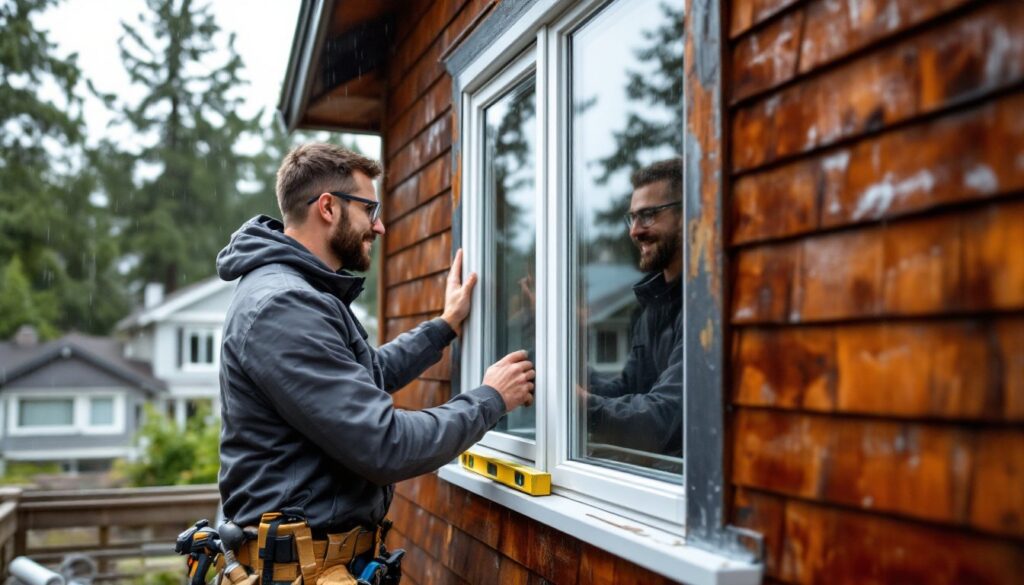
Full-frame replacements are more involved. You’ll need to remove interior and exterior trim, pull the old window and frame, inspect and repair any rot in the rough opening, install the new frame, flash it properly to handle rain (critical in Seattle), insulate, reinstall trim, and paint or stain. That’s a full-day job per window, and mistakes, improper flashing, gaps in insulation, or a frame that’s not square, lead to leaks and drafts.
Second-story windows require staging or scaffolding. Unless you already own the equipment and are comfortable working at height, the cost and safety risk make professional installation the better call.
Permits add another layer. If the city requires one (more on that below), a licensed contractor can pull it and handle inspections. Doing it yourself means navigating the permitting process and scheduling your own inspections, which can delay the project.
For cost comparison, homeowners using platforms like HomeAdvisor or ImproveNet can get multiple quotes to see if the labor savings justify the DIY effort. Pro installation typically costs $150–$300 per window, which includes flashing, insulation, and cleanup.
Seattle Permits and Building Code Requirements
In Seattle, replacing windows usually requires a permit if you’re doing a full-frame replacement or changing the window size or location. Insert replacements (same size, same opening) typically don’t need a permit, but it’s worth confirming with the Seattle Department of Construction and Inspections (SDCI) before starting.
Permits cost around $200–$400 depending on project scope. The process involves submitting plans (even a simple sketch showing window locations and sizes), waiting for approval (usually 2–4 weeks), completing the work, and passing an inspection. The inspector checks flashing details, insulation, and egress requirements.
Egress codes are critical for basement and bedroom windows. Per the International Residential Code (IRC), which Seattle follows, any sleeping room must have at least one operable window with a minimum net clear opening of 5.7 square feet, a minimum width of 20 inches, and a minimum height of 24 inches. The sill can’t be more than 44 inches above the floor. This ensures occupants can escape in a fire.
If you’re in a historic district, Ballard Avenue, Pike Place Market, or parts of Capitol Hill, additional design review may apply. The Landmarks Preservation Board may require you to match original window styles, materials, or muntin patterns. Wood windows are often mandated, which increases cost and maintenance.
Energy codes in Seattle require new and replacement windows to meet IECC Zone 4C standards: a U-factor of 0.30 or lower. Most modern windows exceed this, but verify specs before ordering.
Working without a required permit risks fines and complications at resale. Title companies sometimes flag unpermitted work during closing, forcing retroactive permits or price renegotiation.
Conclusion
Replacing windows in Seattle isn’t just about curb appeal, it’s about keeping water out, heat in, and noise down. Whether tackling a DIY insert replacement or hiring a pro for a full-frame overhaul, the key is matching the right window type and features to the Pacific Northwest’s relentless rain and mild climate. Factor in permits, budget realistically, and don’t skip the flashing. Done right, new windows will perform for 20–30 years and pay for themselves in comfort and energy savings.