Table of Contents
ToggleLas Vegas isn’t kind to windows. Between the blistering summer sun, intense UV radiation, and wild temperature swings from day to night, your windows take a beating year-round. Standard residential windows installed in milder climates simply won’t hold up, or keep your air conditioning bills in check. If older windows are letting heat pour in or cold air escape, homeowners face higher utility costs and uncomfortable interior temperatures. This guide walks through what Las Vegas residents need to know about window replacement las vegas, from selecting desert-optimized glass to understanding local installation costs and contractor vetting.
Key Takeaways
- Las Vegas window replacement requires desert-optimized glass and frames because extreme heat, UV radiation, and dust demand specialized solutions that standard residential windows cannot provide.
- Low-E coatings, dual-pane construction, and proper U-factor (0.30 or lower) and SHGC (0.25 or lower) ratings can reduce air conditioning costs by 15–25% annually in Las Vegas.
- Professional window replacement installation is essential for stucco homes and second-story units, while pocket replacements with wood-frame openings may be suitable for experienced DIY homeowners.
- Nevada-licensed contractors (C-3 Glass & Glazing classification) with verifiable insurance, references, and written warranties protect homeowners from installation defects that become apparent within a year in desert climates.
- Vinyl frames dominate the Las Vegas market due to heat resistance and UV durability, while fiberglass frames offer superior performance in extreme heat at 20–30% higher cost than vinyl alternatives.
- Standard window replacement costs in Las Vegas range from $350–$750 per unit installed, with labor accounting for 40% of total project cost and specialty features like tinting or impact-resistant glass adding $100–$300 per window.
Why Las Vegas Homeowners Need Specialized Window Replacement
Desert conditions demand more from windows than coastal or temperate zones. Las Vegas averages over 300 sunny days annually, with summer temperatures routinely hitting 110°F or higher. That relentless solar gain turns single-pane or poorly sealed windows into thermal liabilities.
UV degradation is another factor. Intense ultraviolet exposure breaks down weatherstripping, degrades vinyl frames, and fades interior furnishings. Windows without low-emissivity (Low-E) coatings allow UV rays to penetrate unchecked, damaging floors, upholstery, and artwork.
Energy costs spike when windows can’t insulate properly. The Southwest has some of the highest residential cooling loads in the country. Upgrading to energy-efficient windows can cut air conditioning consumption by 15–25%, which translates to meaningful savings over a Vegas summer.
Finally, dust and wind stress window seals. Spring dust storms and occasional high winds drive fine particulate into gaps around poorly fitted frames. Quality replacements with compression seals and tight tolerances keep dust out and conditioned air in.
Best Window Types for Las Vegas Climate
Not all window styles perform equally in the desert. Here’s what works, and why.
Double-hung windows remain popular for Las Vegas homes due to their traditional look and ease of cleaning. Both sashes tilt in, which matters when dust accumulates. Look for models with dual-pane glass and Low-E coating. Avoid single-hung units: the weight balance mechanism on cheaper models fails faster in high heat.
Casement windows offer superior air sealing because the sash compresses against the frame when closed. They’re excellent for capturing evening breezes, rare but welcome in spring and fall. Crank mechanisms should be metal, not plastic: plastic gears warp in attic-level heat if installed on second stories.
Sliding windows (also called gliders) suit contemporary ranch-style homes common in Henderson and Summerlin. They require less clearance than casements and hold up well in wind. Confirm the frame has interlocking rails and multiple locking points for security and air-tightness.
Fixed (picture) windows are ideal for north-facing walls or shaded exposures where ventilation isn’t needed. With no moving parts, they offer the best insulation values and lowest air infiltration, critical when every BTU of cooling counts.
Frame material matters as much as style. Vinyl frames dominate the Las Vegas market because they don’t conduct heat like aluminum, resist UV degradation, and require zero maintenance. Fiberglass frames outperform vinyl in extreme heat but cost 20–30% more. Aluminum frames are common in older homes but conduct heat readily: if keeping aluminum, insist on thermally broken designs with a plastic barrier between interior and exterior frame sections.
Energy-Efficient Window Features That Matter in the Desert
Three features separate basic replacements from desert-optimized windows:
Low-E coatings reflect infrared heat while allowing visible light through. In Las Vegas, specify Low-E² or Low-E³ coatings designed for cooling-dominated climates (not heating). These coatings reflect heat outward in summer, reducing solar gain by up to 40%.
Argon or krypton gas fills between dual panes slow heat transfer. Argon is standard and cost-effective: krypton performs slightly better in narrow gaps (under ½-inch) but adds cost. Both are inert, non-toxic, and last the life of the window if seals hold.
U-factor and Solar Heat Gain Coefficient (SHGC) are the numbers that matter. For Las Vegas, target a U-factor of 0.30 or lower (measures insulation) and an SHGC of 0.25 or lower (measures solar heat blocked). Windows meeting these specs typically qualify for federal energy tax credits and local utility rebates. Check with NV Energy for current incentive programs, rebates have ranged from $50 to $200 per window in recent years.
What to Expect: Window Replacement Costs in Las Vegas
Pricing varies based on window size, type, features, and installation complexity. Here’s a realistic breakdown for window replacement las vegas nv projects in 2026.
Standard double-hung vinyl windows (24″×36″ to 36″×48″) run $350 to $650 per window installed for mid-grade products with Low-E glass and argon fill. Budget brands drop to $250–$400, but frame quality and hardware suffer.
Casement and sliding windows cost $450 to $750 installed in similar sizes due to more complex mechanisms and better sealing hardware.
Large picture windows or custom shapes can reach $800 to $1,500+ depending on size and glass package. Specialty glass, tinted, laminated, or impact-resistant, adds $100 to $300 per unit.
Labor accounts for roughly 40% of total cost. Experienced installers in Las Vegas charge $100 to $150 per window for standard replacements in wood-frame homes. Stucco exterior requires cutting and patching, which adds $50 to $100 per opening. Homeowners replacing 10–15 windows often negotiate package pricing that reduces per-unit labor costs.
Many cost estimators like HomeAdvisor suggest the national average hovers around $550 per window installed, but Las Vegas trends 10–15% higher due to demand and desert-specific requirements.
Permits aren’t typically required for one-to-one window replacements that don’t alter the opening size or structural framing. If enlarging openings or replacing load-bearing headers, homeowners need a building permit (around $150 to $300 in Clark County). Always confirm with your local building department before starting work.
Choosing a Window Replacement Contractor in Las Vegas
Vetting contractors carefully saves headaches. Start with these checks:
Licensing: Nevada requires contractors performing work over $1,000 to hold a valid Nevada Contractor’s License (C-3 Glass & Glazing classification for window specialists). Verify licenses at the Nevada State Contractors Board website.
Insurance: Confirm both general liability and workers’ compensation coverage. Request certificates and call the insurer to verify active policies. Window installation involves working on ladders and handling heavy glass, uninsured installers put homeowners at financial risk.
References and reviews: Check recent projects in your neighborhood. Desert climates reveal poor installation fast: failed seals, condensation between panes, and air leaks show up within a year. Platforms offering contractor reviews like Angi aggregate feedback that highlights consistent quality or red flags.
Warranties: Reputable contractors offer two warranties: manufacturer’s warranty on the window itself (typically 10–20 years on glass seals, lifetime on frames) and a workmanship warranty (1–5 years) covering installation defects. Get both in writing.
Quotes: Obtain at least three detailed estimates. Compare not just price but glass specs (U-factor, SHGC, coating type), frame material, hardware quality, and included services (haul-away of old windows, interior/exterior trim, stucco patching). Lowest bid often means lowest-grade materials or rushed installation.
DIY vs. Professional Installation: What Las Vegas Homeowners Should Know
Replacing windows isn’t a beginner DIY project, but experienced remodelers can handle it with the right prep.
When to DIY: If homeowners have replaced windows before, have a helper available (windows are awkward and heavy, 70 to 100 pounds for large units), and the home has wood or vinyl framed openings in good condition, DIY is feasible. Pocket replacements (insert units that fit inside the existing frame without removing exterior trim or stucco) are most DIY-friendly.
Tools required: Cordless drill, level (4-foot minimum), pry bar, utility knife, reciprocating saw, caulk gun, shims (composite, not wood, wood shims compress in heat), and a quality polyurethane or silicone window sealant rated for desert climates.
Key steps:
- Measure the existing frame three times: width at top, middle, and bottom: height at left, center, and right. Order windows to the smallest measurement.
- Remove interior stops carefully to preserve trim.
- Cut sash cords (if double-hung) and remove old sashes.
- Clean the frame, repair any rot, and check for square. Out-of-square openings need shimming or reframing.
- Apply a bead of sealant, set the new window, shim at hinge points and latch points (not just corners), check level and plumb, then fasten per manufacturer’s instructions.
- Insulate gaps with low-expansion foam, standard foam can bow frames. Trim excess after curing.
- Reinstall or replace stops, caulk exterior perimeter.
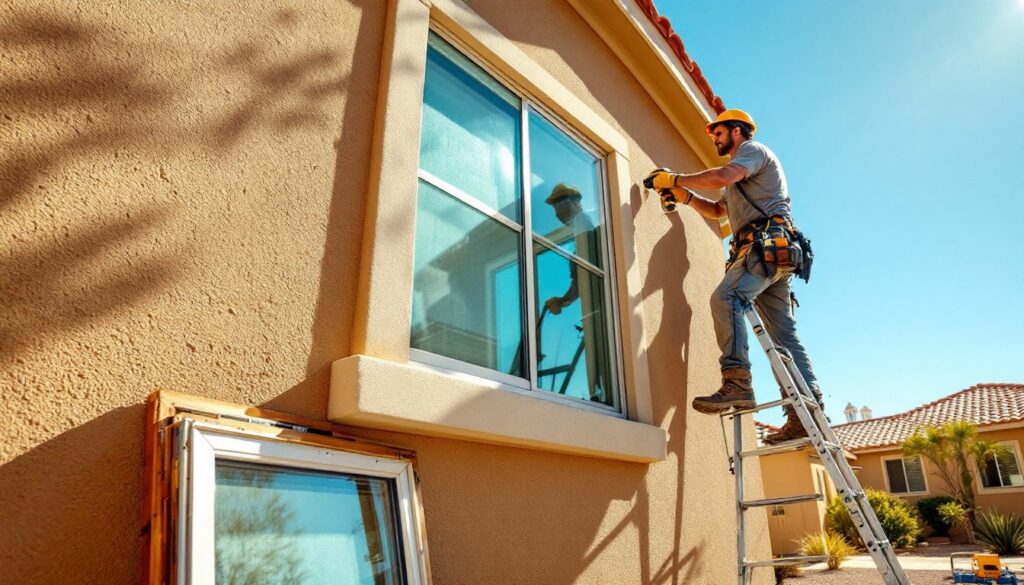
When to hire a pro: Stucco homes, second-story installations, full-frame replacements (removing the old frame entirely), or any situation requiring structural work demand professional installation. Stucco patching alone can turn a straightforward job into a multi-trade headache. Homeowners using guides from resources like ImproveNet often report that DIY window work took twice as long as anticipated.
Safety note: Always wear cut-resistant gloves when handling glass, safety glasses, and use a sturdy ladder with a helper to stabilize large units. Heat exhaustion is real, work early morning or late afternoon in summer, stay hydrated, and take frequent breaks.
Conclusion
Window replacement in Las Vegas is an investment that pays off through lower cooling bills, better comfort, and protection from UV damage. Prioritize Low-E coatings, dual-pane construction, and vinyl or fiberglass frames suited to extreme heat. Get multiple quotes, verify contractor credentials, and don’t shy away from asking for references. Whether tackling a DIY pocket replacement or hiring pros for a whole-house upgrade, the right windows make desert living a lot more comfortable.