Table of Contents
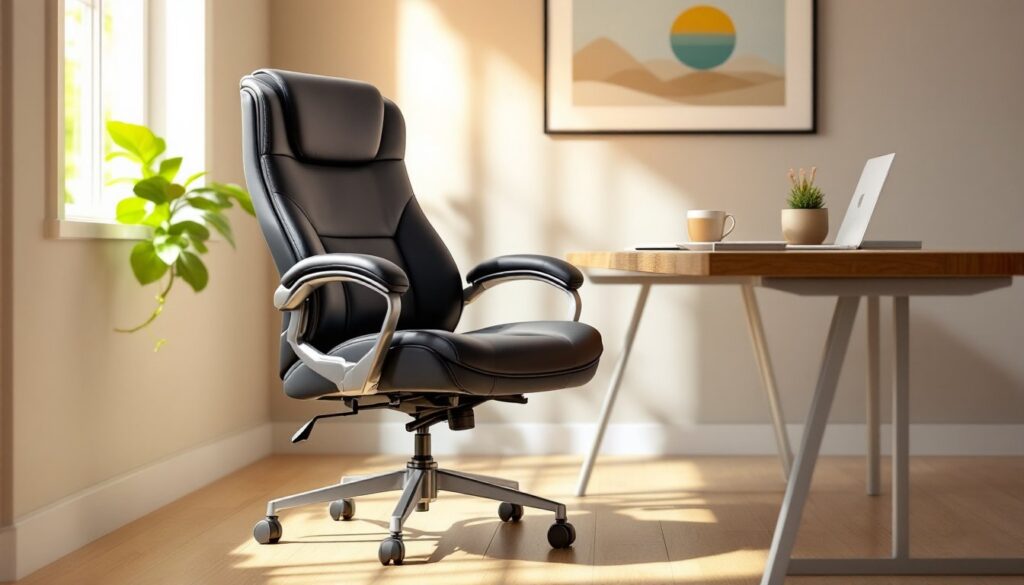
ToggleSetting up a functional home office isn’t just about desk placement and cable management, it’s about investing in seating that supports your body through long workdays. For larger individuals or those who need extra weight capacity, a standard office chair often falls short, leading to discomfort, poor posture, and premature wear. Serta, a brand known for mattress engineering, applies the same comfort principles to their office seating line. Their big and tall chairs deliver reinforced frames, higher weight ratings, and ergonomic features designed for users who need more than a basic swivel chair. This guide breaks down what makes a quality Serta big and tall office chair, how to evaluate models, and what you should know before assembling one in your workspace.
Key Takeaways
- A Serta big and tall office chair provides reinforced frames, wider seat pans (20–24 inches), and Class 4 gas cylinders rated for 400–500 pounds, preventing premature failure and discomfort for larger users.
- Weight capacity means nothing without proper construction—verify welded steel frames, 27–28 inch bases, Class 4 gas cylinders, and plywood seat foundations rather than particleboard for long-lasting durability.
- Essential adjustability features in big and tall office chairs include lumbar support, 3D adjustable armrests, seat depth adjustment (crucial for users over 6 feet), and tilt tension mechanisms to prevent tipping.
- The Serta Smart Layers Arlington Executive Chair (Big and Tall) offers the highest weight capacity at 500 pounds with ComfortCoils and 4D adjustable arms, while the standard Executive Chair balances cost and features for moderate use.
- Proper assembly following the cross-pattern bolt tightening technique and six-month hardware inspections extend chair life, while gas cylinder replacement (common after 3–5 years) costs just $20–40 and requires no special tools.
- Match your Serta big and tall chair to your desk height, flooring type, and space clearance—check min/max seat height specs (typically 18.5–23 inches) and swap casters if upgrading from hard floors to carpet.
Why Big and Tall Office Chairs Matter for Your Home Office
A standard office chair typically supports up to 250 pounds and features seat widths around 18–20 inches. For users who exceed those limits, whether due to height, build, or both, those specs create real problems. Armrests dig into sides, seat cushions compress flat within months, and gas cylinders fail prematurely under excess load.
Big and tall chairs solve this with reinforced steel frames, wider seat pans (typically 20–24 inches), and Class 4 gas cylinders rated for 400–500 pounds. The difference isn’t cosmetic, it’s structural. Using an undersized chair stresses components beyond their design limits, leading to cracked bases, bent backrests, and compromised lumbar support.
Beyond durability, ergonomics shift at larger scales. Taller users need higher backrests to support the shoulder blades, and users with broader frames require wider armrests positioned farther apart. Serta’s big and tall line addresses these details, incorporating memory foam layers, adjustable lumbar bolsters, and tilt mechanisms that accommodate heavier weights without bottoming out.
If you’ve ever had a chair fail mid-workday, armrest snapping, seat tilting sideways, you know the frustration. Proper weight rating isn’t about overbuilding: it’s about matching the tool to the task. Just as you wouldn’t use a step stool rated for 200 pounds to support a 300-pound load, office seating demands the same respect for load limits and material strength.
Key Features to Look for in Serta Big and Tall Office Chairs
Not all “big and tall” chairs meet the same standards. Marketing labels don’t substitute for engineering specs. Here’s what separates capable models from underbuilt ones.
Weight Capacity and Frame Construction
Weight capacity is the headline spec, but it’s meaningless without proper frame construction. Look for chairs rated at 400 pounds minimum, some Serta models push to 500 pounds. That rating should come from a welded steel or aluminum frame, not plastic supports or pressed wood bases.
Check the base diameter. Standard chairs use 24-inch bases: big and tall models should feature 27–28 inch bases for stability. The gas cylinder (pneumatic lift) should be Class 4, which is engineered for heavy-duty use. Class 3 cylinders, common in budget chairs, aren’t rated for sustained loads above 250 pounds and will sag or fail faster.
Seat pans should use solid plywood or steel as the foundation, not particleboard. Particleboard compresses and warps under weight, creating uneven support. Serta uses layered plywood in their higher-end models, which distributes load evenly and resists flex.
Casters matter more than most people realize. Look for rollerblade-style wheels rated for the chair’s weight capacity. Hard plastic casters designed for 200-pound chairs will crack or lock up under heavier use, especially on hard flooring.
Ergonomic Support and Adjustability
Comfort without adjustability is a gamble. Bodies vary, and a fixed-position chair won’t suit everyone, no matter how well-padded.
Start with lumbar support. Serta office chairs typically include either built-in lumbar bolsters or adjustable AIR Lumbar Technology, which uses an inflatable cushion to fine-tune lower back support. For taller users, verify the backrest height, it should reach at least to the shoulder blades, ideally between 22–26 inches from the seat pan.
Seat depth adjustment is critical for users over 6 feet tall. A seat that’s too shallow leaves thighs unsupported: too deep and it digs into the back of the knees. Many Serta models offer 2–3 inches of slide adjustment.
Armrests should adjust in three dimensions: height, width, and angle. Fixed armrests on a big and tall chair are essentially useless, they’ll either be too narrow or positioned wrong for desk height. Look for 3D or 4D adjustable arms.
Tilt tension and tilt lock let users customize recline resistance. Heavier users need stiffer tension springs to avoid the chair tipping back unexpectedly. Serta’s tilt mechanisms in their big and tall line include adjustable tension knobs that accommodate a wide weight range without bottoming out.
Memory foam seat cushions and back padding help, but thickness matters. Thin foam (under 2 inches) compresses flat fast. Serta uses layered memory foam and high-density polyurethane in their comfort-focused models, which maintains shape longer than single-layer foam.
Top Serta Big and Tall Office Chair Models Compared
Serta’s big and tall lineup includes several models with different feature sets. Here’s a practical breakdown.
Serta Big and Tall Executive Chair (Model 45637): Rated to 400 pounds, this model features bonded leather upholstery, AIR Lumbar Technology, and a reinforced steel frame. Seat width measures 22 inches, with 3-inch thick memory foam cushioning. It includes 2D adjustable arms (height and pivot) and a Class 4 gas cylinder. Best for users who prioritize traditional executive styling and moderate adjustability. Assembly requires a Phillips-head screwdriver and takes about 30 minutes.
Serta AIR Health and Wellness Chair (Big and Tall edition): Rated to 400 pounds, this version swaps bonded leather for mesh backing and fabric upholstery, which improves breathability in warmer climates. It retains the AIR Lumbar system and adds 3D adjustable arms. Seat depth adjusts 2.5 inches, which helps taller users. The mesh back requires more assembly precision, the backrest bolts need to be tightened evenly to avoid twisting. Plan for 40 minutes of assembly.
Serta Smart Layers Arlington Executive Chair (Big and Tall): This model pushes weight capacity to 500 pounds with a heavy-gauge steel frame and 28-inch base. It uses ComfortCoils in the seat (similar to mattress spring tech) combined with memory foam for longer-lasting support. Upholstery options include faux leather and fabric. The seat measures 23 inches wide, and the backrest reaches 25 inches tall. 4D adjustable arms and seat depth adjustment are standard. Assembly is more involved due to the coil system, expect 50 minutes and a second person to help align the backrest.
All three models include rollerblade casters and tilt tension adjustment. The Arlington offers the most durability and adjustability but costs more. The AIR Health and Wellness model suits users who run hot or prefer breathable materials, while the standard Executive Chair balances cost and features for moderate home office use.
When comparing, check return policies. Office chairs need a break-in period of 1–2 weeks. If something feels off after assembly, it may improve, but if the seat width or backrest height is fundamentally wrong, that won’t change. Most retailers allow 30-day returns, but verify before unboxing.
How to Choose the Right Serta Big and Tall Chair for Your Space
Selecting a chair isn’t just about weight rating, it’s about matching the chair to your desk setup, flooring, and daily habits.
Measure your desk height first. Standard desks sit at 29–30 inches. Your chair’s seat height should adjust so that elbows rest at 90 degrees when hands are on the keyboard. Serta big and tall chairs typically offer seat height ranges of 18.5–23 inches, which accommodates most users. If your desk is fixed at an unusual height, check the chair’s min/max seat height specs before buying.
Clearance under the desk matters. Big and tall chairs have deeper seat pans and wider bases. Measure the space between desk legs or pedestal width. A 28-inch base might not fit under some compact desks. If clearance is tight, consider a chair with a 27-inch base and adjustable armrests that tuck under the desk.
Flooring type affects caster choice. Hard floors (wood, tile, laminate) work fine with rollerblade-style wheels. Carpet requires casters with larger contact patches to avoid sinking or snagging. Some Serta models ship with hard-floor casters: if you have medium-pile carpet, swap them for carpet casters, available from most office supply retailers for $15–25.
Material preference comes down to climate and cleaning habits. Bonded leather looks professional but peels after 2–3 years of heavy use and doesn’t breathe. Mesh backing stays cooler but collects dust and pet hair. Fabric upholstery is durable and breathable but harder to wipe clean. If you eat at your desk, leather or faux leather simplifies spill cleanup.
Consider your work style. If you spend 6+ hours daily at your desk, invest in the model with the most adjustability, cheap out here and you’ll pay in discomfort or early replacement. If your office doubles as a guest room or occasional workspace, a mid-tier model suffices.
Finally, think about assembly help. Big and tall chairs are heavier, components can weigh 50–70 pounds total. If you’re assembling solo, clear a large floor space and have a box cutter, Phillips-head screwdriver, and adjustable wrench handy. Some models include Allen wrenches, but a ratcheting screwdriver speeds up the process. Many modern home design trends emphasize ergonomic workspaces that blend function and aesthetics, so selecting a chair that fits your room’s style matters as much as the specs.
Assembly, Maintenance, and Care Tips
Proper assembly extends chair life and prevents wobble or premature failure. Don’t rush this step.
Unbox everything and inventory parts before starting. Serta chairs typically include the seat pan, backrest, base, gas cylinder, armrests, casters, and hardware pack. Lay parts out on a clean surface, carpet works better than hard flooring to avoid scratches.
Install casters first. Push them firmly into the base holes until they click. If they resist, apply downward pressure while twisting slightly, don’t hammer them in. Once inserted, flip the base and tug each caster to confirm it’s seated.
Insert the gas cylinder into the base center hole. Most cylinders have a tapered end: it should drop in with light pressure. Don’t grease the cylinder, it’s a friction fit and doesn’t require lubrication.
Attach the seat pan to the tilt mechanism. This step varies by model, but usually involves four bolts through pre-drilled holes. Tighten bolts in a cross pattern (front-left, rear-right, front-right, rear-left) to evenly distribute pressure. Leave bolts slightly loose until all are started, then tighten fully with a wrench. Over-tightening can strip threads or crack plastic housings.
Secure the backrest to the seat pan. Larger chairs use a mounting bracket that slides into place before bolting. Align the backrest vertically before tightening, if it’s canted, loosen bolts, straighten, and re-tighten. A crooked backrest stresses the frame and causes uneven wear.
Slide the assembled seat/backrest unit onto the gas cylinder. You may need to lift and drop it with some force to seat the cylinder into the tilt mechanism. Once in place, test the height adjustment, it should move smoothly without sticking.
Attach armrests last. Most Serta models use side-mounted arms with two bolts each. Position them symmetrically and snug bolts evenly. If armrests wobble after assembly, retighten the bolts, loose hardware is the most common assembly mistake.
Maintenance is straightforward. Vacuum fabric or mesh weekly to prevent dust buildup. Wipe leather or faux leather with a damp microfiber cloth monthly, avoid harsh cleaners that dry out or crack the material. Check casters quarterly for hair or debris wrapped around axles: this causes drag and uneven rolling.
Every six months, inspect hardware. Bolts loosen over time, especially on tilt mechanisms under heavy use. Tighten any that feel loose with a wrench or screwdriver. If the chair develops squeaks, apply a silicone-based lubricant (not WD-40, which attracts dust) to pivot points on the tilt mechanism. For those who tackle DIY projects regularly, integrating workshop organization tips can help keep tools and maintenance supplies accessible for quick chair tune-ups.
Gas cylinder failure is the most common issue after 3–5 years. Symptoms include the seat slowly sinking during use or refusing to adjust height. Replacement cylinders cost $20–40 and install the same way as the original, remove the seat from the old cylinder, pull the old cylinder from the base, and install the new one. No special tools required beyond what came with the chair.
If upholstery tears, fabric repair kits work for small holes. Bonded leather peeling is harder to fix, consider a seat cover instead of replacing the whole chair. Mesh tears usually mean replacing the backrest, which Serta sells as replacement parts for some models.
For additional insights on home office setups and furniture care, many DIY enthusiasts turn to practical home improvement resources that cover everything from ergonomic workspace design to furniture maintenance.
Warranty coverage varies by model, but Serta typically offers 5–10 years on structural components (frame, base, gas cylinder) and 1–2 years on upholstery and foam. Register your chair after purchase to activate warranty coverage. Keep the receipt and model number, you’ll need both for warranty claims.