Table of Contents
ToggleAir purifiers work quietly in the background, pulling allergens, dust, and pollutants out of the spaces we live in. But how long should they run to actually do their job? Too little runtime means you’re breathing the same stale air. Too much, and you’re wondering if your electric bill just doubled. The answer isn’t one-size-fits-all, it depends on room size, air quality, and what’s happening in the home. Whether someone’s dealing with pet dander, seasonal pollen, or just wants fresher air after cooking, understanding runtime helps the unit work smarter, not just longer.
Key Takeaways
- Running an air purifier 24/7 is recommended for most households since pollutants accumulate continuously, and modern HEPA units are designed for constant operation with minimal power consumption (30–50 watts on low settings).
- How long to run an air purifier depends on room size, air quality conditions, and specific household triggers like pets or cooking; match the purifier’s CADR rating to your space to ensure effective 4–5 air changes per hour.
- Air purifiers take 12–15 minutes to clean a 200-square-foot room and 30–60 minutes to handle acute pollution events like cooking smoke or pet activity, but baseline maintenance requires continuous or scheduled operation.
- For allergy and asthma sufferers, pet owners, and homes near high-pollution areas, 24/7 operation is essential, while general households benefit from 12–18 hours daily focused on occupied hours.
- Monthly energy costs for continuous 24/7 operation are modest ($3.50–$17 depending on fan speed), making constant filtration more economical than managing accumulated pollution and replacing clogged filters prematurely.
- Optimize runtime by using auto mode, keeping rooms sealed, cleaning pre-filters monthly, and focusing operation on high-pollution activities like cooking or peak pollen season to extend filter lifespan and maintain air quality efficiently.
Should You Run Your Air Purifier 24/7?
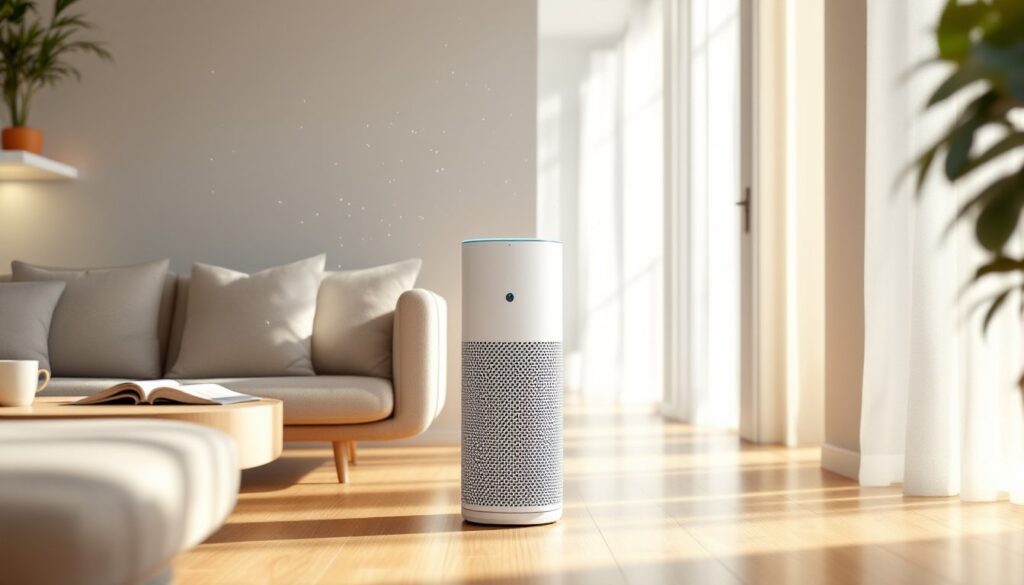
For most households, running an air purifier 24/7 is the best approach. Air quality doesn’t take breaks, pollutants, allergens, and VOCs (volatile organic compounds) accumulate continuously from cooking, cleaning products, outdoor air infiltration, and everyday activities. A purifier running constantly maintains baseline air quality instead of playing catch-up.
Modern HEPA units are designed for continuous operation. They draw minimal power (typically 30–50 watts on low settings, comparable to a standard light bulb), and their motors are built for long-term use. Running them non-stop doesn’t harm the unit, in fact, frequent on/off cycling can stress components more than steady operation.
That said, not every situation demands 24/7 runtime. In rarely used rooms like guest bedrooms or basements, running the purifier a few hours before and during occupancy makes more sense. Some homeowners prefer running units on high during peak activity hours (cooking, cleaning, when windows are open) and dialing back to low overnight. Many purifiers include auto modes that adjust fan speed based on real-time air quality sensors, offering a hands-off compromise.
The main trade-off is filter lifespan. Continuous use means filters reach their capacity faster, but the air stays cleaner. Intermittent use extends filter life but allows pollutants to build up between cycles. For allergy sufferers, asthmatics, or homes with pets, the health benefit of constant filtration typically outweighs the cost of replacing filters more frequently.
How Long Does It Take an Air Purifier to Clean a Room?
Air purifiers are rated by their CADR (Clean Air Delivery Rate), measured in cubic feet per minute (CFM). This tells you how quickly the unit can filter air in a given space. Most manufacturers design their units to complete 4–5 air changes per hour (ACH) in the rated room size, meaning the entire volume of air passes through the filter four to five times every 60 minutes.
For a 200-square-foot bedroom with 8-foot ceilings (1,600 cubic feet), a purifier rated for that space should clean the air in roughly 12–15 minutes per cycle. After an hour, the air has been filtered multiple times, significantly reducing particulate levels. In a larger 400-square-foot living room, the same unit would take longer, or you’d need a higher-capacity model to maintain that 4–5 ACH rate.
Here’s the catch: “clean” is relative. If someone just burned toast or let a dog shake off after a rainy walk, the purifier needs time to work through that sudden spike. Expect 30–60 minutes of high-speed operation to knock down acute pollution events. For ongoing baseline maintenance, the unit cycles air continuously, capturing new particles as they’re introduced.
Always check the manufacturer’s recommended room size and match it to the actual space. Undersizing a purifier means it runs constantly at high speed and still can’t keep up. Oversizing is fine, it just means the unit spends more time on quieter, low-speed settings while still achieving the necessary ACH.
Factors That Affect How Long You Should Run Your Air Purifier
Room Size and Air Purifier Capacity
The biggest factor in runtime is whether the purifier is correctly sized for the space. A unit rated for 300 square feet will struggle in a 500-square-foot room, running at maximum capacity just to maintain minimal air changes. This not only means longer runtimes but also faster filter degradation and higher energy use.
Use the purifier’s CADR rating and the room’s cubic footage to calculate realistic ACH. For example, a purifier with a CADR of 200 CFM in a 1,600-cubic-foot room delivers 7.5 ACH, plenty of capacity to run on medium or low most of the time. The same unit in a 3,000-cubic-foot space drops to 4 ACH and needs to run on high continuously.
Open floor plans complicate this. If the living room, dining area, and kitchen share one large space, treat it as one combined zone. Either run multiple units or choose a high-capacity model designed for larger areas. Don’t expect a bedroom-sized purifier to handle 1,000 square feet effectively.
Air Quality Conditions and Pollution Levels
Baseline air quality dictates how often to run air purifier units at higher speeds. Homes near busy roads, construction sites, or wildfire-prone regions face higher outdoor pollution infiltration. Pet owners deal with constant dander and fur. Smokers (or neighbors who smoke) introduce particulates and VOCs that require aggressive filtration.
Seasonal factors matter too. Pollen counts spike in spring and fall, demanding longer high-speed runtimes or 24/7 operation during peak weeks. Winter months with closed windows and increased indoor heating can trap VOCs from furniture, paint, and cleaning products. Humidity affects performance as well, very dry air (below 30% RH) keeps particles airborne longer, while high humidity (above 60%) can cause particles to settle faster but may also promote mold spores.
Many newer units sold through retailers like smart home product specialists include integrated air quality monitors that display PM2.5, VOC, and humidity levels in real time. If readings consistently show “poor” or “moderate” air quality, the purifier should run longer or at higher speeds. If the air stays “good,” dialing back to low or running intermittently is reasonable.
Homes with specific triggers, like a cat that sheds year-round or a kitchen that sees daily high-heat cooking, benefit from running the purifier continuously in those zones. Bedrooms where someone sleeps 7–8 hours nightly should prioritize overnight operation, even if other rooms run on schedules.
Optimal Running Schedules for Different Situations
Allergy and Asthma Management: Run the purifier 24/7 in bedrooms and main living areas. Continuous filtration keeps allergen levels low and prevents symptom flare-ups. During high pollen season, keep windows closed and boost fan speed during daytime hours when pollen counts peak.
Pet Owners: Constant operation is the baseline. Pet dander, fur, and tracked-in outdoor contaminants accumulate quickly. Place the purifier in the room where pets spend the most time, living rooms or bedrooms if they sleep on the bed. Run on medium to high speed during active hours when pets are moving around, shedding, or shaking off.
Cooking and Kitchen Use: Position a purifier near (but not directly next to) the cooking area and run it on high for 30–60 minutes during and after cooking, especially when frying, searing, or using the oven. Cooking releases PM2.5 particulates, smoke, and grease particles that quickly degrade air quality. If the kitchen opens to the living space, extend runtime to allow the unit to filter the larger combined area.
Wildfire Smoke and Outdoor Pollution Events: During active wildfire season or pollution alerts, run all purifiers 24/7 on high. Seal windows and doors, and avoid running exhaust fans that pull in outdoor air. Check and replace filters more frequently, smoke particles clog HEPA filters faster than typical household dust. Some home technology guides track air quality indices (AQI) in real time, helping homeowners decide when to boost purifier operation.
General Household Maintenance: For homes without specific air quality issues, running the purifier 12–18 hours daily is reasonable. Focus on occupied hours, mornings through evenings, and dial back overnight if noise is a concern (though many units run near-silent on low settings). Use timers or smart plugs to automate schedules, or rely on the purifier’s built-in auto mode to adjust based on detected air quality.
Rarely Used Rooms: Guest bedrooms, storage rooms, or basements don’t need continuous filtration. Run the purifier for 2–3 hours before the space will be occupied, then leave it on low during use. This keeps the air fresh without wasting energy when the room sits empty.
Energy Costs and Filter Lifespan Considerations
Running an air purifier 24/7 sounds expensive, but the math is more favorable than most people expect. A typical HEPA purifier on low speed draws 30–50 watts. At the national average of $0.16 per kWh (as of 2026), that’s roughly $3.50–$5.80 per month for continuous operation. High-speed settings (100–150 watts) cost more, around $11–$17 monthly, but most units don’t run on high constantly unless air quality is poor.
Compare that to the cost of filter replacements. HEPA filters typically last 6–12 months depending on runtime and air quality, with replacements ranging from $20 to $60 each. Activated carbon filters (for odors and VOCs) last 3–6 months and cost $10–$30. Some models feature washable pre-filters that capture large particles and extend the life of the main HEPA filter, rinse them monthly under a faucet and let them dry.
Continuous operation does mean filters reach capacity faster. A filter rated for 12 months in “normal” use might need replacement at 8–9 months if the purifier runs 24/7 in a high-pollution environment. But, intermittent use doesn’t proportionally extend filter life, dust and allergens still accumulate on the filter media even when the unit is off, and turning it back on forces the system to work harder through a partially clogged filter.
Energy-saving tips:
- Use auto mode if available. The purifier ramps up when it detects pollution and idles on low when air is clean, balancing performance and efficiency.
- Run on low or medium settings during off-peak hours (overnight, when everyone’s out of the house). Lower fan speeds use significantly less power while still maintaining baseline filtration.
- Keep the room sealed. Open windows and doors force the purifier to constantly filter incoming outdoor air, shortening filter life and increasing energy use.
- Clean pre-filters regularly. A clogged pre-filter restricts airflow, forcing the fan to work harder and draw more power.
Some combo units that pair air purification with humidification, like those reviewed in appliance testing roundups, add moisture management to the equation. These typically draw more power (100–200 watts when both functions run), so factor that into runtime decisions, especially in dry winter months when both features see heavy use.
Bottom line: the health and comfort benefits of consistent air filtration usually outweigh the modest energy and filter costs. For households with allergies, pets, or poor outdoor air quality, continuous operation is a worthwhile investment. For others, a 12–18 hour daily schedule strikes a practical balance. How often should i run my air purifier? As much as needed to keep the air breathable, and the unit’s designed to handle it.