Table of Contents
ToggleColeslaw is a staple at barbecues, potlucks, and weeknight dinners, but it’s also one of those dishes that makes people wonder if it’s still safe to eat three days later. Unlike dry goods stored in the pantry or frozen items with extended lifespans, coleslaw sits in that tricky middle zone where freshness depends on ingredients, dressing type, and how it was stored. Understanding how long coleslaw will last in the refrigerator can prevent food waste and keep your household safe from spoilage-related issues. Whether you mixed up a batch with your grandmother’s recipe or grabbed a tub from the grocery store, knowing the shelf life and proper storage techniques ensures you’re serving fresh, crisp slaw every time.
Key Takeaways
- Homemade coleslaw lasts 3 to 5 days in the refrigerator, while vinegar-based varieties can last up to 7 days compared to mayo-based slaws that spoil faster.
- Store coleslaw in airtight containers on middle or lower refrigerator shelves at 34°F to 40°F, and keep dressing separate from vegetables to extend freshness by up to a week.
- Discard coleslaw immediately if it shows signs of spoilage such as off smells, visible mold, slimy texture, or discoloration.
- Extend coleslaw shelf life by salting and draining cabbage before dressing, choosing vinegar-based dressings, and using a paper towel in the container to absorb excess moisture.
- Store-bought coleslaw lasts 1 to 2 days past the printed date if unopened, and 3 to 5 days after opening, though pre-packaged vegetable mixes without dressing last 7 to 10 days unopened.
Understanding Coleslaw Shelf Life: Store-Bought vs. Homemade
Not all coleslaw is created equal when it comes to storage duration. The type of dressing, preparation method, and preservatives all influence how long coleslaw is good in the refrigerator. Here’s what you need to know about each variety.
How Long Does Homemade Coleslaw Last?
Homemade coleslaw typically stays fresh for 3 to 5 days in the refrigerator when stored properly. The exact timeframe depends heavily on the dressing base. Mayonnaise-based coleslaws tend to spoil faster because mayo is an emulsion that breaks down over time and provides an environment where bacteria can multiply if temperature isn’t controlled. Vinegar-based dressings, on the other hand, have a longer shelf life, sometimes up to 5 to 7 days, because the acidity acts as a natural preservative that inhibits bacterial growth.
Another factor is when you dress the slaw. If you mix the dressing with shredded cabbage immediately, moisture begins breaking down the vegetables right away, leading to sogginess and faster spoilage. For maximum freshness, store the dressing separately and combine just before serving. This technique can extend the usable life of the shredded vegetables to about a week, though the dressing itself still needs to be used within its own safe window.
Ingredients like shredded carrots, onions, or added fruits (pineapple, apples) can also reduce shelf life because they release additional moisture and sugars that accelerate spoilage. If you’re making coleslaw in advance for an event, stick with basic cabbage and carrot, and add delicate ingredients the day of.
How Long Does Store-Bought Coleslaw Last?
Store-bought coleslaw generally lasts 1 to 2 days past the printed “use by” or “best by” date if it remains unopened and refrigerated at 34°F to 40°F. Once opened, treat it like homemade: consume within 3 to 5 days. Commercially prepared coleslaw often contains preservatives like potassium sorbate or citric acid that extend shelf life slightly beyond homemade versions, but these aren’t miracle workers.
Pre-packaged coleslaw mix (just the shredded vegetables, no dressing) lasts longer, typically 7 to 10 days unopened, and 3 to 5 days after opening. If you buy the dry mix and add your own dressing at home, follow the homemade coleslaw guidelines.
Always check the packaging for specific guidance. Some brands use modified atmosphere packaging (MAP) that reduces oxygen inside the container, slowing spoilage. Once you break that seal, the clock starts ticking faster.
Proper Storage Techniques to Maximize Freshness
How you store coleslaw matters as much as what’s in it. Poor storage accelerates spoilage, turns crisp cabbage into mush, and increases the risk of foodborne illness. Follow these guidelines to keep your coleslaw fresh as long as possible.
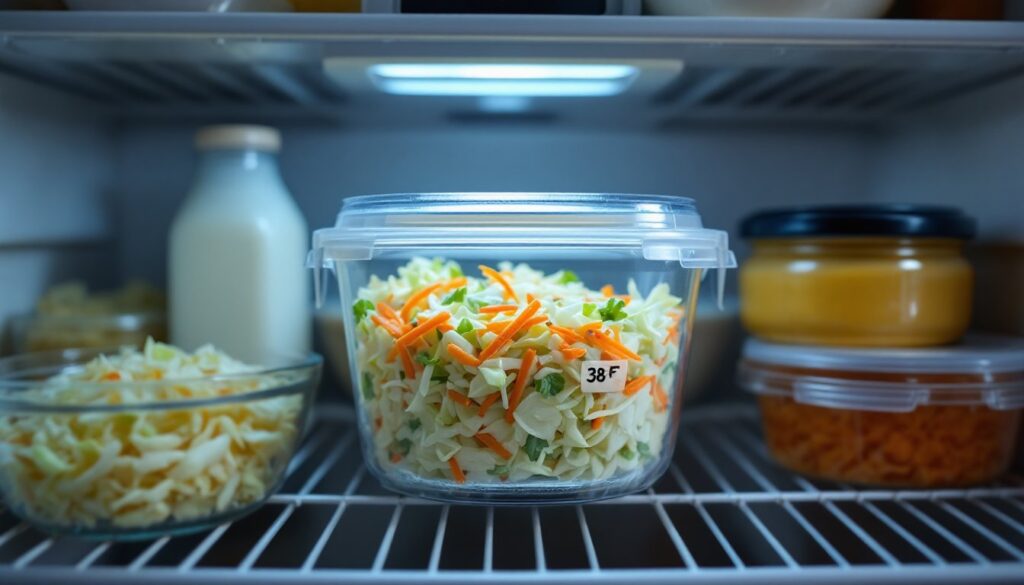
Use airtight containers. Transfer coleslaw into a food-grade plastic or glass container with a tight-fitting lid. Exposure to air causes oxidation, which degrades flavor and texture. If you’re storing a large batch, divide it into smaller containers, opening and closing one big tub repeatedly introduces warm air and contaminants.
Keep it cold, consistently. Your refrigerator should maintain a temperature between 34°F and 40°F. Place coleslaw on a middle or lower shelf, not in the door. Door storage exposes food to temperature fluctuations every time the fridge opens. If you’ve got a refrigerator thermometer (available for under $10 at most home improvement stores), use it. Many fridges run warmer than their dials suggest, especially older models.
Avoid cross-contamination. Always use a clean utensil when scooping coleslaw. Introducing a fork or spoon that touched other foods, especially raw meat, can transfer bacteria into the container. If you’re serving coleslaw at a gathering, portion out what you need and return the rest to the fridge immediately. Food left at room temperature for more than 2 hours (or 1 hour above 90°F) should be discarded, per USDA guidelines.
Store dressing separately when possible. If you’re prepping coleslaw ahead of time, keep the shredded vegetables and dressing in separate containers. Combine them within an hour of serving. This prevents the cabbage from wilting and extends the overall usable life of both components.
Don’t freeze coleslaw. Freezing cabbage-based salads ruins the texture. The water content in cabbage expands when frozen, then turns mushy upon thawing. If you need to preserve cabbage long-term, ferment it into sauerkraut or kimchi instead, both keep for months and involve a completely different preservation process.
Signs Your Coleslaw Has Gone Bad
Even with proper storage, coleslaw won’t last forever. Knowing when to toss it prevents unpleasant meals and potential food poisoning. Here’s what to watch for.
Off smell. Fresh coleslaw has a clean, slightly tangy or neutral aroma depending on the dressing. If it smells sour, fishy, or like ammonia, discard it immediately. Mayonnaise-based slaws can develop a rancid smell as the oils break down.
Visible mold. Any fuzzy spots, white, green, black, or otherwise, mean the entire batch is compromised. Mold spores spread through soft foods quickly, so don’t try to scoop out the affected area and eat the rest.
Slimy texture. Cabbage should feel crisp or slightly softened if dressed, but never slimy or slippery. A slimy coating indicates bacterial growth. This is especially common with mayo-based dressings that sat too long or weren’t stored cold enough.
Discoloration. Fresh cabbage is pale green or purple (depending on variety). If it turns gray, brown, or develops dark spots, it’s past its prime. Carrots may also lose their bright orange color and appear dull or translucent.
Excessive liquid. Some liquid separation is normal, dressing and released vegetable moisture will pool at the bottom. But if there’s a significant amount of watery liquid and the cabbage looks completely wilted, the coleslaw has deteriorated.
Taste test (with caution). If it looks and smells okay but you’re uncertain, take a tiny taste. If it’s bitter, overly sour (beyond the dressing’s normal tang), or just “off,” trust your palate and throw it out. When in doubt, it’s not worth the risk. Foodborne illness from spoiled mayo or unwashed vegetables can cause anything from mild stomach upset to serious infections, particularly in young children, elderly individuals, or anyone with a compromised immune system.
Tips for Extending Coleslaw’s Refrigerator Life
Want to get the most mileage out of your coleslaw? A few proactive steps can add a day or two to its usable lifespan without sacrificing quality.
Salt and drain cabbage before dressing. Toss shredded cabbage with 1 to 2 teaspoons of salt and let it sit in a colander for 30 minutes before mixing with dressing. This draws out excess moisture, preventing the slaw from becoming watery. Rinse the cabbage lightly and pat dry with paper towels before dressing. Less moisture means slower spoilage.
Choose vinegar-based dressings for longer storage. If you’re making coleslaw more than a day in advance, opt for a vinegar and oil dressing instead of mayo. The acidity in vinegar (white, apple cider, or rice vinegar all work) inhibits bacterial growth. A basic ratio is 3 parts oil to 1 part vinegar, with sugar, salt, and pepper to taste.
Add a paper towel to the container. Place a folded paper towel on top of the coleslaw before sealing the lid. It absorbs excess moisture that condenses inside the container, keeping the slaw crisper longer. Replace the towel each time you open the container.
Buy or prep in smaller batches. Coleslaw doesn’t improve with age. Make or purchase only what you’ll realistically consume within 3 to 5 days. A half-batch of homemade slaw takes the same effort as a full batch and reduces waste.
Refresh wilted coleslaw. If your coleslaw is a day or two old and starting to look sad but hasn’t spoiled, you can sometimes revive it. Drain off excess liquid, add a handful of freshly shredded cabbage, and toss with a bit more dressing. This won’t work if the original batch is already spoiled, only if it’s simply lost some crispness.
Mind your prep hygiene. Wash hands, cutting boards, knives, and bowls thoroughly before and after handling raw vegetables. Cabbage can carry soil-borne bacteria like E. coli or Listeria, especially if not washed properly. Even though you’re shredding pre-washed coleslaw mix, a quick rinse under cold water doesn’t hurt.
Conclusion
Knowing how long coleslaw lasts in the refrigerator, and how to store it correctly, keeps your meals fresh and your household safe. Homemade coleslaw stays good for 3 to 5 days, store-bought lasts about the same once opened, and vinegar-based varieties edge out mayo-based ones for longevity. Store it in airtight containers, keep your fridge at the right temperature, and watch for signs of spoilage like off smells or slime. With a little attention to detail, you’ll enjoy crisp, flavorful coleslaw right up until the last serving.